
Piedmont Regional Juvenile Detention Center Releases
Piedmont Regional Juvenile Detention Center is a secure juvenile facility operated through a regional commission. It is not an adult county jail, a state prison, or an open former-inmate archive. Its release information follows a restricted channel because it concerns children and juvenile proceedings. The public should not try to identify, trace, or publish a child through adult custody tools. An adult public-record search widget does not override these limits and is not a juvenile release route.
The lawful path begins with the person's relationship to the child. A parent or legal guardian can contact the facility using the information already provided through the placement process. An attorney should use the case and client channels available to counsel. Another person must first establish that the facility or court authorizes access. Staff may confirm nothing to a caller who lacks that authority, and the absence of an answer should not be treated as proof of release or continued detention.
For a Lunenburg-linked matter, the juvenile court and facility records serve different roles. The court controls its order and proceeding. The center controls the child's placement and operational release under that authority. A guardian's instructions can address pickup and care, but they do not replace the court order. Each source should be used only for the fact it controls.
Piedmont Regional Juvenile Detention Center Records
Release confirmation should stay within the authorized chain. The Piedmont Regional Juvenile Detention Center is the first operational contact when the caller is a parent, guardian, attorney, or other person with recognized authority. Facility staff decide what can be discussed and how identity or relationship must be established. No official open online juvenile locator or released archive was documented.
A short verification process keeps the inquiry focused without requesting protected details. Do not submit a child's name to adult county-jail, VADOC, BOP, or ICE tools just because those systems are public. Those systems cover different custody types and can lead to a false match.
- Use the contact details previously supplied in the juvenile case or call the center's official main number.
- State whether the caller is a parent, legal guardian, attorney, or another authorized participant. Follow the identity-check steps staff provide.
- Ask which court order controls release or transfer and what authorized next step applies. Do not ask staff to disclose another child's information.
- Contact the Lunenburg juvenile court clerk through the published court channel when the question concerns an order, hearing, or case record.
- Follow the facility and court instructions for pickup, guardian notification, or transfer. Do not infer a public status from silence.
Note: A juvenile court order and a facility custody event are related records, but one does not disclose every detail of the other.
Piedmont Regional Juvenile Detention Center Release Contacts
The facility is in Farmville and serves member localities that include Lunenburg County. Use its public line for authorized placement, custody, or release routing. No public walk-in records process, release-search form, fee schedule, or general caller verification service was found in the research. Calling the number does not guarantee disclosure. It provides the correct door for a person who already has a lawful role.
Piedmont Regional Juvenile Detention Center
701 Industrial Park Road
Farmville, VA 23901
Phone: 434-392-3834
Secure juvenile detention facility
Regional commission operator
Questions about a Lunenburg juvenile case belong with the juvenile side of the Lunenburg Combined General and Juvenile and Domestic Relations Court. Its physical address is 11435 Courthouse Road, Lunenburg, VA 23952. The clerk's public number is 434-696-5508, and listed office hours are 8:30 a.m. to 4:30 p.m. Those details support contact, not public access to a child's file.
The facility and court should not be treated as interchangeable. The court can address the case and order within lawful limits. The center handles the child's secure placement and carries out authorized movement. If a lawyer is involved, counsel can help direct a request through the proper protected channel.
Piedmont Regional Juvenile Detention Center Release Scope
Piedmont Regional Juvenile Detention Center was established in 2001. The official facility information describes a 20-bed secure center serving children from ages eight through seventeen and participating counties that include Lunenburg. These numbers explain the center's scope. They do not create a public roster or permit disclosure about an individual child.
The official juvenile center site is the source for this facility profile and the successful research image:
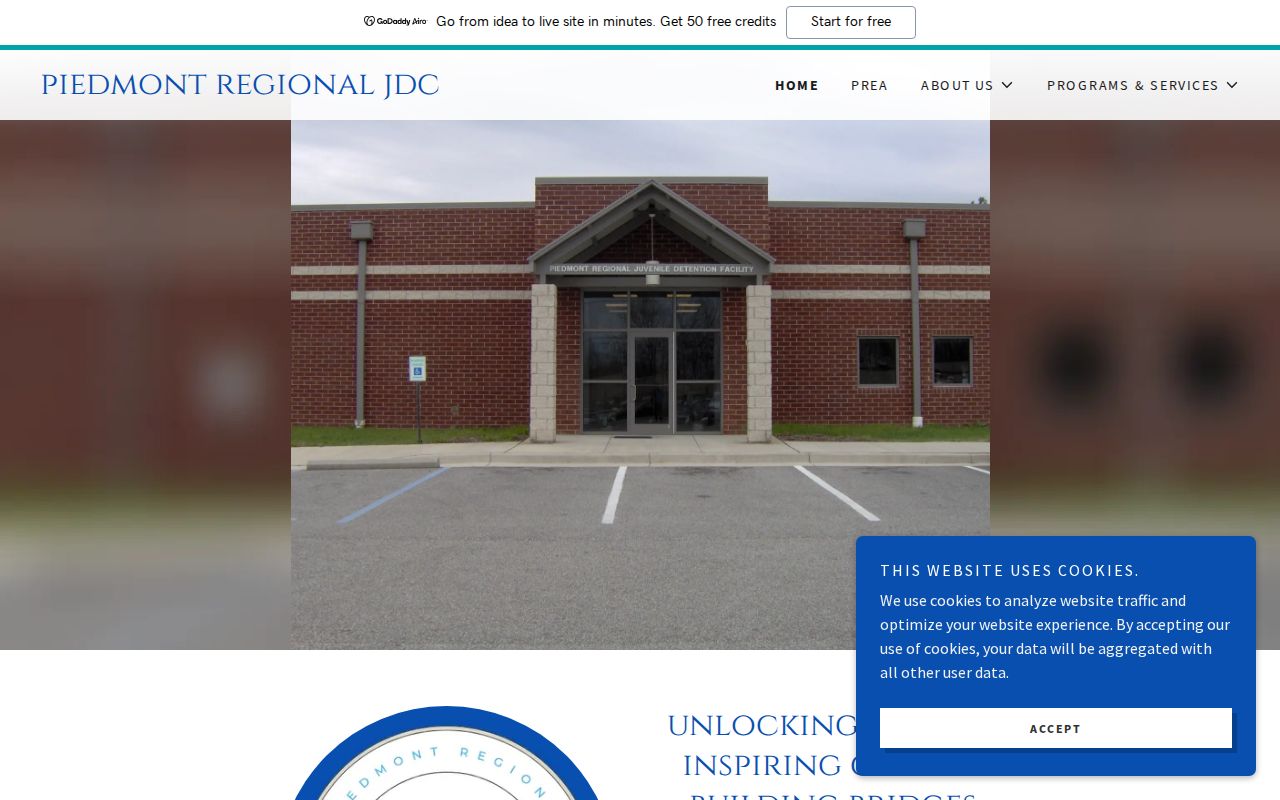
The secure setting may hold a child under a court-directed placement while a case proceeds. A release can mean return to a legal guardian or another court-approved outcome. A transfer can mean continued custody or placement elsewhere. Neither event should be described more specifically than the authorized record permits.
Juvenile Center Court Release Route
The Lunenburg Combined Court houses both General District and Juvenile and Domestic Relations functions, but adult criminal case access does not make juvenile cases public. The research identifies the same physical courthouse location for the combined court and gives a separate mailing address at 160 Courthouse Square, Suite 201, General Delivery, Lunenburg, VA 23952. A guardian or attorney should use the case-specific instructions supplied by the clerk or counsel rather than the adult statewide search.
The adult Virginia online case-information hub remains useful for understanding the boundary: it is an official adult court-search gateway, not a means to obtain protected juvenile details. The successful portal image in the research depicts the court system, but the facility-specific image is used here to avoid implying that a public name search covers juvenile detention.
| Question | Proper authorized channel | Public-search limit |
|---|---|---|
| What order controls? | Juvenile court clerk, attorney, or case paperwork | Do not search an adult criminal docket for a child |
| Has facility movement occurred? | Juvenile center, after authority is verified | No open facility roster was documented |
| Who may receive the child? | Court and facility instructions to the guardian | Do not publish pickup or placement details |
| Was the child transferred? | Authorized court and facility communication | Do not infer destination from an online absence |
A court hearing or order can precede the actual operational movement. That gap is normal. Preserve the label and source of each date instead of describing an order date as the moment the child left the center.
Juvenile Center Adult Record Boundary
Lunenburg's three-facility map can be confusing. Piedmont Regional Jail is the adult regional jail in Farmville. Lunenburg Correctional Center is a VADOC adult state prison in Victoria. Piedmont Regional Juvenile Detention Center is a separate secure juvenile facility in Farmville. Similar names and nearby addresses do not merge their records, custody rules, or release routes.
An adult arrested in Lunenburg generally follows the PRJ path, with PRJ Records, Virginia VINE, and the adult court case. A sentenced state prisoner follows the VADOC locator and formal VADOC records. A child follows the restricted facility, court, legal guardian, and attorney channel. The adult Lunenburg County release coverage should not be used to look for a juvenile.
- Adult regional jail
- A local detention institution serving several counties, including Lunenburg.
- State prison
- A VADOC institution for adults under state corrections authority.
- Juvenile detention
- A secure setting for children whose records and proceedings have restricted access.
- Transfer
- A move from one authorized placement or custodian to another, not necessarily release to a guardian.
Using the wrong system can create both an inaccurate conclusion and an improper disclosure risk. Keep all juvenile questions within the restricted route, even when a name resembles a public adult record.
Piedmont Regional Juvenile Detention Center Records Access
Virginia public-record rules distinguish adult booking material from juvenile records. The adult routine booking-photograph request rule does not authorize a juvenile image request. Likewise, the confidential inmate-file standards discussed for adult local jails should not be stretched into a claim of open juvenile access. A protected result is a legal boundary, not a gap to fill with unofficial sources.
No one should try to reconstruct a child's detention history from social posts, cached pages, commercial databases, or adult records with a similar name. That approach can be wrong and can defeat the protection the juvenile process provides. When a record is restricted, authorized counsel, the guardian, the facility, and the court remain the proper sources. The response may be limited even for a person with a close connection if the law or order does not permit more.
Release from the juvenile center also does not prove that every court condition ended. The child may remain subject to a court plan, supervision, placement requirement, or another lawful direction. Only the controlling order and authorized communication can define those terms. Public disclosure stops at that boundary and must not reveal a child's identity, location, planned pickup, or protected case detail.
Note: Restricted juvenile access protects the child; it is not an invitation to seek the same information through an unofficial source.