
Lunenburg Parole Versus Probation
Probation may be ordered instead of incarceration or after part of a sentence. Parole is conditional release authorized by the Virginia Parole Board for an eligible prisoner. Physical release does not end either form of supervision. Discharge comes later, when the relevant duty to corrections has ended.
| Term | Who authorizes it | What it means |
|---|---|---|
| Probation | Sentencing court | Community supervision under stated court terms |
| Parole | Virginia Parole Board | Conditional community release for an eligible prisoner |
| Discharge | Responsible authority | The applicable custody or supervision obligation has ended |
A parole grant is not the physical release date. Certification, a parole plan, notices, and operational steps follow the Board decision. A District Office result later supports that institutional custody ended while supervision continues.
Probation can begin without a prison release. A court may suspend incarceration and impose supervision, or probation may follow time in custody. That is why a roster exit cannot identify the legal status. The sentencing order supplies the court's terms, while the VADOC location helps verify current state supervision. For parole, add the Board decision. Together these records separate legal authority, physical movement, and the later status.
- Supervisee
- A person under VADOC community supervision.
- Absconder
- A supervisee alleged to have stopped complying or reporting, not a status to infer from a missing search result.
- Revocation
- An official action that can return a person to custody after a violation process.
Verify Lunenburg Supervision Status
The VADOC Inmate & Supervisee Locator is the public starting point. It covers current VADOC custody and supervision, not every person who once served a sentence.
The search accepts a DOC ID or a name, but those routes have different safeguards. A DOC ID is seven digits. A name query needs at least the first three letters of the first name and the complete last name. Optional filters can narrow a common name, yet an overly narrow filter may hide the correct person. Compare the result's identity, location, and date before concluding that Lunenburg supervision applies. VADOC describes its public scope as current custody or supervision, so a fully discharged former supervisee may require formal records rather than another locator refresh.
- Search with the seven-digit DOC ID, or use at least three letters of the first name and the full last name.
- Use age, race, gender, and location filters only to separate similar names.
- Read the Location field. A prison means custody; a District Office or community setting supports supervision outside prison.
- Read the displayed Release Date in context. A future date at a prison is forward-looking, not proof of release.
- Use the sentencing order or Parole Board decision to distinguish probation, parole, and another supervision form.
- Request VADOC records when the person is fully discharged and outside the locator's current scope.
The locator updates daily and warns that data can be inaccurate or stale. A no-result does not establish discharge, an active warrant, or freedom from another custodian.
The official locator image comes from the VADOC search source.
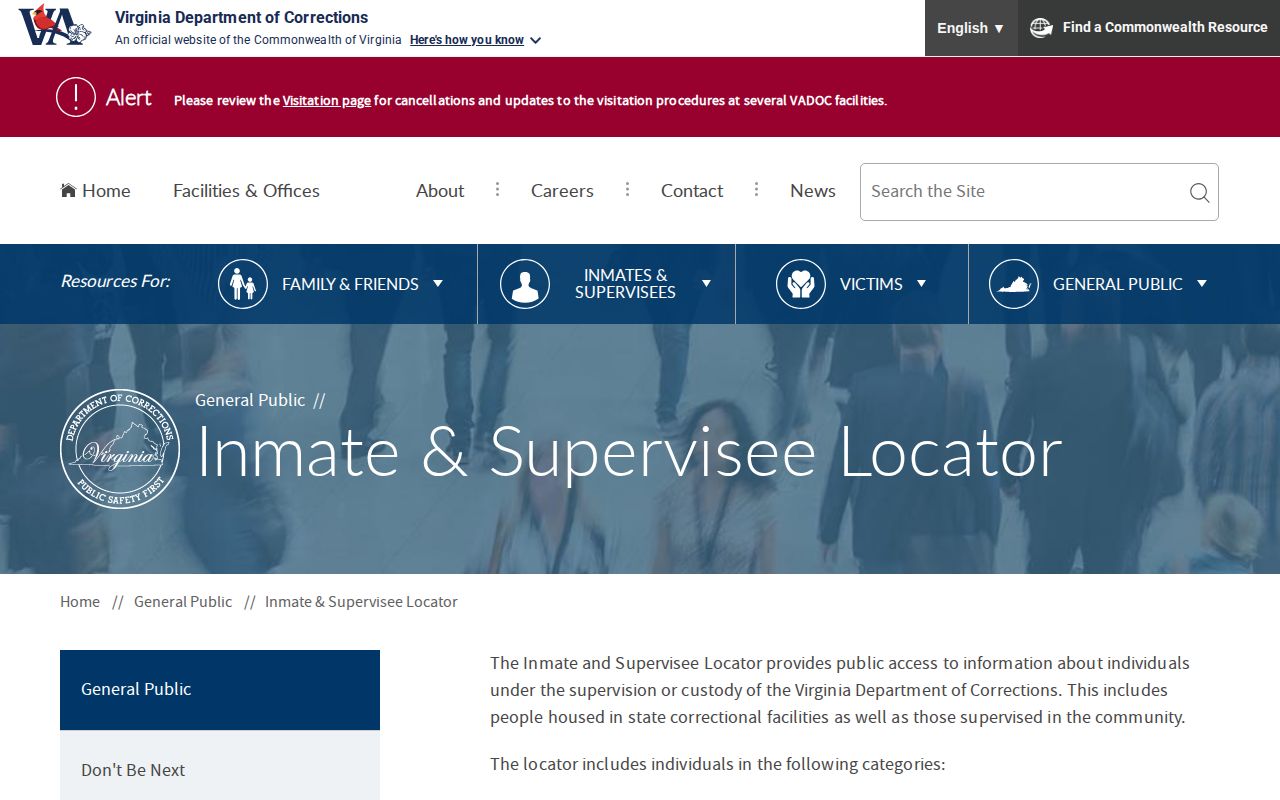
Match more than the name before drawing a conclusion from a community or prison location.
Lunenburg District 8 Supervision Office
Lunenburg County is served by South Boston Probation & Parole District 8. The correct office is not Farmville merely because Piedmont Regional Jail is there. District 8 serves Halifax, Lunenburg, Mecklenburg, and the Town of South Boston.
2510 Houghton Avenue
South Boston, VA 24592
434-575-5774
Chief: Antwain Davis
No official walk-in or public check-in procedure was found. Start with the locator, then call for routing when a public record appears stale. Staff may protect supervision details and should not be expected to disclose an individual's schedule or conditions.
The office route is shown in the VADOC directory.
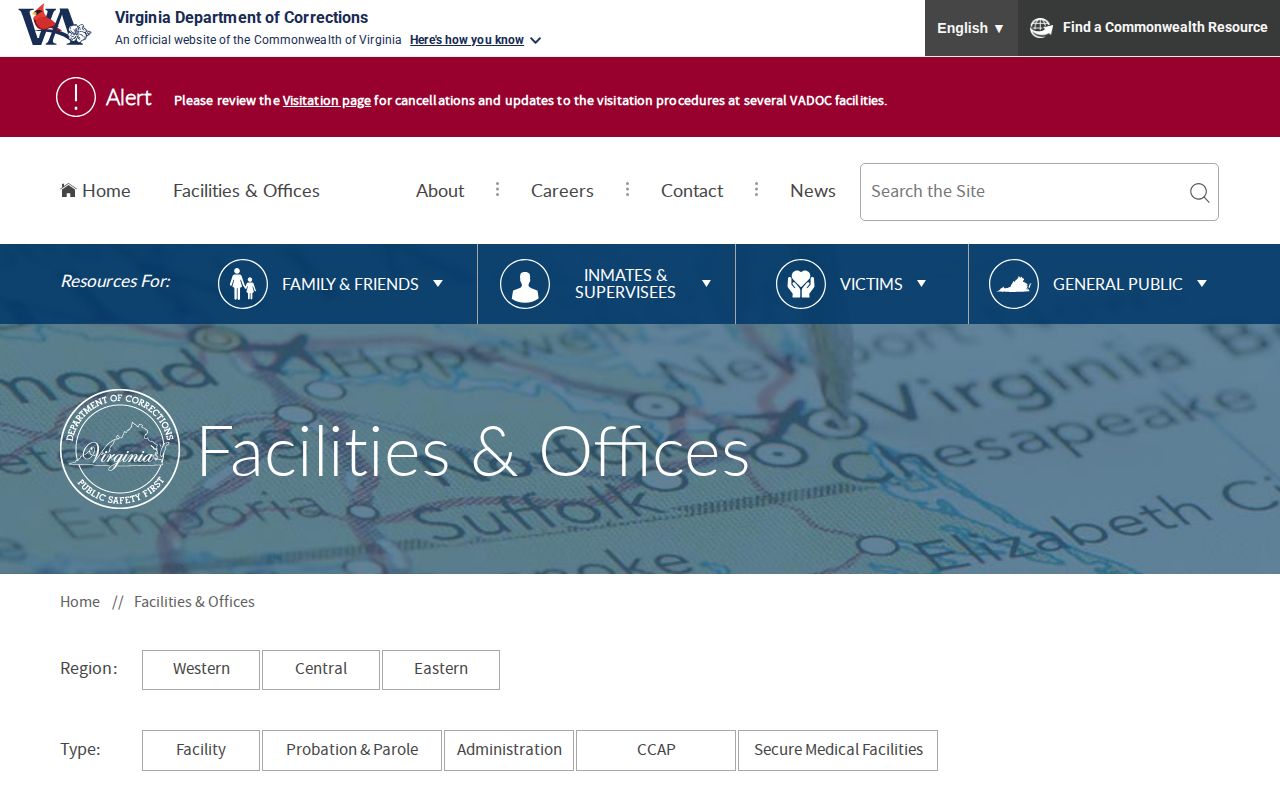
The directory confirms the South Boston route despite the jail's Farmville location.
Lunenburg Parole Board Records
The Virginia Parole Board public-hearings page lists qualifying final public deliberations. It is not a calendar for every interview or every eligible prisoner. When the Board is inclined to grant specified release, an agenda is posted at least three working days before the public video meeting.
Virginia's eligibility rules also resist one simple cutoff. Section 53.1-165.1 generally limits discretionary parole for post-1995 felonies but retains current exceptions. Eligible categories can include older offenses, specified jury-sentence cohorts, certain juvenile-offense lengthy or life sentences, qualifying older misdemeanor combinations, and Youthful Offender Act cases. For parole-eligible terms, §53.1-151 applies different first-eligibility fractions and caps to first and later commitments, with separate treatment for life sentences. The current statute controls when a summary page and amended law differ.
Monthly decision PDFs appear on the decision archive after required notices, at the end of the following month. A report can show grant, denial, deferred action, or violation action. Search the appropriate month, read the stated outcome, then confirm later custody or supervision through VADOC. The Board record controls its decision, while VADOC controls the later movement.
The Board process display is reproduced from its official process page.
That sequence explains why a grant date and an actual release date should never be merged.
Lunenburg Violations and Absconders
No Lunenburg-specific public absconder or warrant list was established. A missing locator result must not be converted into either status. A supervision violation can lead to detention or revocation, but the court, VADOC, and Board records must support the event.
A violation record and a warrant record answer separate questions. The Board may address parole or post-release supervision revocation, while a court record may show a related proceeding. District 8 can route questions about its public process but has no published promise to confirm a protected personal condition. Do not publish an individual's report schedule, residence, treatment detail, or unpublished condition. When an official record uses “absconder,” preserve the source and date; when it does not, describe only the verified locator or custody result.
Virginia VINE covers custody changes in local and regional jails, including PRJ. It does not track post-release probation or parole status. VADOC's separate NAAVI notification system also ends actual-release notifications when state custody ends and does not provide ongoing community-supervision alerts.
Note: Verify the legal basis in the court or Board record and the current setting through the responsible custodian.
Lunenburg Structured-Custody Alternatives
PRJ publishes Work Release and Home Electronic Monitoring rules. Both require court or DOC approval and remain structured custody alternatives, not unconditional release. Home Electronic Monitoring includes weekly visits usually on Tuesday at 10:00 a.m., subject to change.
The published program charges are program costs, not release-record fees. Work Release lists $220 upfront and $90 weekly. Home Electronic Monitoring lists $500 upfront for signup and the first three weeks, then $115 weekly. Eligibility and approval control entry.
Lunenburg Correctional Center has also hosted VADOC Concordance programming focused on resilience, recovery, and release-planning navigation. Program participation does not itself establish release, parole, or discharge. The custody record still controls.
Correct Lunenburg Supervision Errors
Virginia law gives an individual a route to inspect their own CCRE or arresting-agency criminal-history information for completeness and accuracy. Under Virginia Code §9.1-132, that person can challenge an error through the prescribed correction process.
This path fits a wrong release, disposition, or identity entry. It is distinct from asking District 8 to alter a court order. Start with the agency that controls the disputed record, identify the exact field, and preserve the official response.
A court disposition issue belongs with the clerk or formal court process. A VADOC location or computation issue belongs with VADOC. A PRJ booking or release-time issue belongs with PRJ Records. Routing the challenge to the record owner matters because District 8 does not control every source that may mention the same person.
How Lunenburg Supervision Ends
Supervision ends through an official discharge, not through silence in a public search. A person can leave prison, remain on parole or probation, and later complete supervision. Each stage has a different record.
For the full custody chain, compare the sentencing order, Board decision when parole applies, VADOC location, and formal discharge record. The Lunenburg County release-record route explains how the jail, court, and receiving agency pieces fit together. Juvenile supervision and records remain restricted and are not part of this adult lookup.
Keep dates under their original labels. A Board action can precede prison release, and prison release can precede final discharge by years. If sources conflict, ask the office that owns the disputed event. The Board controls its decision, VADOC controls custody and supervision, and the court controls its order.
PRJ Records remains the source for an earlier regional-jail exit. District 8 cannot supply the exact PRJ gate time, and a VINE event cannot define later supervision terms.
When the person is no longer in the current locator, request the historical VADOC record instead of assuming that supervision ended on the date the online result vanished.
Note: A release from PRJ, a prison exit, and a complete VADOC discharge may occur on three different dates.